Youth

“Peter! C’mon! It’s 8:30 already!”

Claire was in the midst of a ritual observed by parents of teenagers for centuries, one mysteriously unchanged since the advent of the Network, and the retirement of the human race. Teenagers were amongst the people on the planet still required to be in a given place at a given time, which was curious, given that they were the least suited to perform that task.

“Can’t I just work with my math tutor today?”

“You can’t let other the people in your group do the whole project for you.”

“The other people in my group are creeps.”

“Peter!”

“They don’t know the difference between entropy and potential energy.”

“Well, that’s why they need you there.”

It was a small mercy that Claire was spared the trial of suggesting a lunch option. Peter would be home for lunch today, and even those days he was at school all day, lunch was provided by the Food Network. She just needed to make sure Peter was dressed and standing at the curb for a podcar, and…

“Have you eaten anything?” she asked.

“No.”

Claire sighed.

“Get dressed,“ she said, and then, after Peter had closed the door to his room. “Madge, can we have a blueberry bran muffin and an orange for Peter to eat in the podcar.”

“Certainly,” the family’s domestic AVA answered.

Claire turned to her daughter, sitting with her husband at the counter, finishing up her eggs. Judy was not yet a teenager, and so much easier to get out the door. Claire had had a thought in her mind to say something when she turned, but forgot about it as she watched Judy chattering happily to James.

Judy paused to push in another forkful. James looked up and smiled to see Claire watching them.

“I’m going ride with Judy to school and go on to the golf club from there. Do you want to come up to the club for lunch. Around 1?”

“That would be good,” said Claire. “I wanted to talk to you about Jill.”

Claire walked over to James so she wouldn’t be talking to him from across the room.

“She’s thinking about having a baby,” she said quietly.

“What?! Didn’t she skip the parenting courses in high school?”

“Yeah. She was the never-going-to-have-kids party girl then,” said Claire.

“Good Lord. How old is your sister? 27?”

Before Claire could answer Peter’s bedroom door opened and Peter emerged, clothed.

“There’s a muffin and an orange by the door,” said Claire.

She might have been telling him there would be thumbscrews and the rack before the beheading.

“Look,” she said, “you can spend the afternoon with the math tutor AVA, but you need to get out and work with people.”

“Why? Where is it written I have to work with people? Especially those people.”

“Why must you always ask that question? Do you think the answer is going to change?”

“I’m waiting for someone to give me a sensible answer.”

Claire tugged lightly at Peter’s sweater, smoothing out where it was bunched at the shoulders.

“You might think now that you’re better off on your own, but you’re not. People need people.”

“Are all those people going to disappear if I stay in today?”

“Oh Peter. Just get going would you?” she said, and then.

“The muffin!” she shouted, as his long legs hurried him out the door. He spun, grabbed it from the table by the front door, and was gone.

***

About a block from home, Peter chucked the muffin out the window of the podcar, then instructed it to stop at a café where he grabbed a chocolate doughnut. Over the last few months he had determined that he could pass up his breakfast for a doughnut once a week. He wondered if the Network had told his parents. If it had, they had not said anything about it.

By the time he got to school he regretted having tossed the muffin. He was still hungry, but there was no time to eat now.

He made his way to the lab bench. Eva and Siobhan, the two girls at the table, hated him, scarcely able to exchange two words with him without rolling their eyes. And Chris, in the three weeks their lab group together, he did not think he had heard Chris say two words. Chis would stare off into space while the other three did the work, except when Peter was doing all the work himself.

The project for the day was pendulum motion, experimenting with different weights, different lengths, higher and lower amplitudes, and Peter was dreading it. He had started some preliminary research the night before and got caught up in the subject, spending three hours on it. He had grasped the concept of potential energy converting to kinetic energy, the point of this experiment, within a few minutes, and moved on to the entropy implications of stretchable strings and pivots with friction and air resistance, material well beyond this day’s experiments.

How was he supposed to spend the morning with these three and a vastly oversimplified pendulum experiment without screaming?pendulum (2)
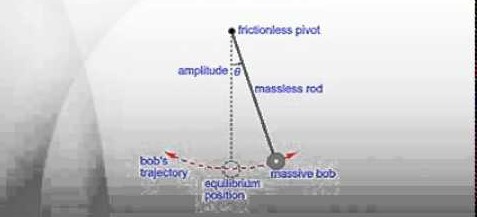
Eva looked up at Peter as he approached.

“So, where do we start?” she asked.

“How about by looking at the instructions you have open on the screen,” Peter responded.

Eva rolled her eyes.

There were about 100 14- and 15-year olds in the lab, divided up into groups of three and four. There was no teacher. The Education Network provided instructions on the screens, with resources to explore for extra help available. On this day there were three adults in the room, education volunteers. There were as many as six on some days, occasionally none at all.

It was not as if the room was without supervision if there were no adults present. The Network observed and recorded the behaviour of every student.

These students had been wearing a Network watch from the time they were born. The key function of the watch initially was to monitor the health of the baby. Crib death rates had dropped to virtually zero in watch-wearing babies. There was little interaction between baby and Network. Parents provided all the care for infants in their first year, with the Network providing the necessaries to the parents.

Over that first year, however, the Network was getting to know each baby as an individual, measuring how different stimuli induced particular physiological responses. When, as a toddler, the child started talking, a personal AVA was introduced, and the Network would experiment with different conversational approaches, measuring responses and rewarding positive behaviour with known, desired, individualized stimuli.

The Network would come to know what the child wanted and needed better than the child did. For privacy reasons, no human could directly access this information.

This process was well understood by the parents, who relied on the Network for child-rearing advice. It was also understood the system was not perfect. The children could play the system, learning what was the absolute minimum to get what they wanted. Adolescents, as they had for millennia, often acted out in unpredictable ways that were clearly against their interests, and that threw all the Network algorithms into a spin.

But this rarely played out as seriously disruptive behaviour in the classroom. Each student’s AVA had enough carrot and stick strategy at hand to prevent that.

Peter could not resist over the next hour pointing out how their measurements did not match the theory because the pendulum bob was swinging through air, the string bent and stretched and twisted, and rubbed where it was connected at the top.

The girls looked at him blankly; Chris stared out the window.

Peter brought up on the screen a site he had found the previous night where you could do virtual pendulum experiments. You could start with a pendulum that perfectly converted potential energy to kinetic energy, then add air resistance, stretchable strings, friction at the pivot. The site revealed the minute temperature changes in the string.

“That’s entropy, right?” said Eva.

Now it was Peter’s turn to stare blankly.

“Look it,” Chris interjected before Peter could respond. “I’m sure this is all amazing, but can we just get this done and get out of here? Like I need to know what entropus is?”

“Entropy,” said Peter.

“Are you not getting me?” said Chris. “I don’t care. Let’s just get it done.”

“I know,” said Siobhan, clearing the screen. “Just tell me what to put in the report.”

***

Peter was home an hour early. His sister was still at school and his parents out at lunch. He still hadn’t had anything to eat since the chocolate doughnut.

“Madge,” he said. “Can I get a 12-inch, cold-cut sub?”

“Certainly,” said Madge. “It’s been a long morning for just a blueberry muffin. You should get up earlier so you can have more for breakfast.”

“You know I didn’t eat the blueberry muffin, don’t you.”

“Of course. But I make you think about it more if I pretend even for a moment I don’t.”

“Just shut up and make me a sandwich.”

“Blah, blah, blah,” said Madge.

Cold-cut sub was a bit of a misnomer for what Madge delivered to him. There was no cutting of meat involved. The protein in the sub was individually pressed from flesh extracted from beetles by exquisitely-designed machines next to the beetle farm in the basement. This particular sandwich was made up from three different flavours of beetle wafer. While even someone accustomed to eating actual slices of meat would have trouble telling the difference by looking at the sandwich, one bite would be plenty.

Peter, who had rarely eaten mammal meat, savoured every chew.

As he ate he called up Matt, his math tutor AVA. While he had grasped the basic entropy concepts in pendulum motion, he had found the math to be beyond him.

“So this is calculus, right?” asked Peter.

“Yes, it is,” said Matt. “We’ve poked at that a little before, but you weren’t ready to pursue it seriously.”

“Well, I’m ready now,” said Peter.

Peter did not pause to consider why he should spend his afternoon studying calculus. He was vaguely aware he had a distant cousin who had been one of the last working human physicists. He had met her at his Great-Great Aunt Sarah’s 100th birthday party a few years ago. Peter had been already considered gifted at math and his mother had made a point of introducing the two of them. The woman, whose name he couldn’t remember, had said some words of encouragement, but Peter was too shy to continue the conversation.

This vague awareness did not equate to anything like inspiration. It did not occur to him that he might make some important discovery with this talent. No one encouraged that belief, or even suggested such a thing was possible. He was merely curious, and filling the time.

Eva was at that moment filling the time playing a virtual reality empire-building game. She was seated on a throne in her virtual world. An advisor spread a map out before her and presented the latest information from explorers on the frontier.  They considered advantageous positions for a new settlement.

Siobhan was playing softball with friends, balancing on her toes between first and second base, her palms itching for the feel of the ball as the pitch went in. Then, as the ball was knocked out to centre field, sprinting out to cut off the throw, her thoughts on preventing the first base runner from making it home on the play.

Chris was disconnected from the Network. The Network noted he was in the 100th percentile for disconnected time in his age group. Chris did not want to talk about it: not to his parents, and not to his AVAs.

Peter was soon engaged with a collection of tutorials, games and virtual reality experiences introducing the principles of differential calculus. The Network, which was good at a lot, had 30 years experience of teaching math and was better at that than most things.

After 90 minutes, sensing Peter’s mental fatigue, Matt wrapped up the last VR experience and said, “Time for some fresh air.”

“What about a game of Strange Effusions?” countered Peter.

“Nope,” said Matt.

Peter sighed, took off his head set, which had gone dark, and plunked down the stairs to the ground floor.

He had almost the whole afternoon before him.

“Randomize left or right,” he said, when he reached street level.

“Right.”

Peter turned right, and repeated the request for random direction at the next intersection, and the next, and the next. He was soon not asking for directions or even pausing at intersections, the Network giving his random directions as he approached choices. He found himself passing his home a mere five minutes later. He considered going back in, but carried on.

An hour later his random wanderings took him into the old town. He loved the variety of the buildings here, in comparison with the standardized, efficiency housing in the suburbs. Some of the homes, a striking number of them whole buildings designed for a single family, had been retrofitted for modern living. Others were set aside as museums, representing particular years in that city. Some of those could be walked through casually and others could be booked for holidays, providing a more in-depth experience of life in that era.

Random directions directed Matt into a 2014 house. He glanced into the front room as he passed. A large piece of hardware, apparently required for the screen on the face of it, was hanging on the wall. On the screen a smartly-dressed man sucked on a burning stick, looking moodily off into the middle distance.

Peter wandered into the kitchen, where he bathed in unfamiliarity. He pulled on some of the doors. In one a light came on revealing a box, empty except for a glass disk. A waft of cold air passed over his arm when he opened the door to a larger box. This one was not empty: cartons and jars were scattered over the shelves. There seemed to be food in the jars.

A friend of his had holidayed in a 1994 house. He had described preparing food in a kitchen much like this one. Every day they had to make breakfast, lunch and dinner.

Peter didn’t get it.

On the way out he spotted  a replica of an almost century-old mobile phone sitting on the front table. He cradled it in his hand, marveling at the thought of having to deal with such a tiny, physical screen, instead of the virtual screens available to him almost anywhere.

The house’s AVA suggested he hold down the button and ask the phone a question.

“What is a refrigerator?” he said.

“I found these resources on the web for you,” the phone responded.

Peter shook his head, put the phone back on the table, and walked out of the house.

“Almost dinner time,” said Madge’s voice, after a few more random turnings. “A podcar will be by in two minutes to take you home.”

And at the next random turn the podcar was there. Peter climbed in and was driven home to join his family.


A man of business

Victor Bowes loved the view of the pear orchard off his balcony in the late spring, when the trees were in blossom. It had been a very different view when he purchased the estate, the lawn spreading down to the lake, the white gravel walkways and ornamental shrubbery. Many compromises had been required of him in the last 30 years; this was amongst the least troubling.

The view compared favourably with the Cezanne painting hanging over the fireplace in his bedroom behind him.

Friends had told him there were other paintings in his collection that would better match the rococo fireplace, but Victor liked the Cezanne and so it stayed. The authentic Louis XV bed was enough to pull the room together, he believed, and he felt no embarrassment about the 19th century American divan either, which he simply found comfortable.

“What time is it?” he asked, not wanting to glance away from the blossoms and at his watch.

“3:17.”

“Could we have some tea in the front room?”

“Certainly.”

The front room, while he owned it, as he did the whole estate, was a public space. Victor retained only his bedroom and an adjacent sitting room as his own. The rest was open to the public. Victor had struck this deal with the Network so that it would clean the building and keep it in repair. With money obsolete, it had proven too difficult to maintain the necessary staff.

Victor was still a multi-billionaire, not that that made any difference to anything.

That the antiques and paintings in most of his home were open to public view was irritating in the first few years. There was something of a rush when the house was opened, but interest tapered off. Days could go by with no visitors. The occasional bus tour came through, but Victor was able to book space for his family to stay when they visited, and he found the inconvenience minimal.

He even occasionally gave tours to people he found wandering the halls.

No one was allowed to enter the home without their watch on, so security was as close to complete as it could get. The Network set a high priority on safeguarding human heritage.

In the Internet Age, Victor had made a lot of money creating educational software, developed a serious fortune in currency trading, and joined the billionaires club with early investments in robotics. It was the perfect 21st century success recipe, at least in the early part of the century. There was a degree of perfection to the recipe in the latter part of the century too, but more like a storm.

These were the first three industries crushed when the Network moved into business.

While Victor did not foresee this, at least, not the speed at which it would happen, when the Network first started launching companies he was among the first to warn there could be trouble.

The first software products released by the Network, which focused on teaching children reading and math skills, attracted little attention initially. Advertisements appeared, sales were made. It started small and there was no reason to suspect anything unusual.

Within a few weeks, a proliferation of five-star reviews for a handful of products did attract attention. And then people began to ask, “What is Ultimate Enterprises?”

While some journalists and business people were distracted with that question, it became apparent that Ultimate Enterprise software was superior to anything else on the market. Victor’s educational technology companies were by this time only a small part of his holdings, but he still instructed his competitive intelligence department to find out more about the company. He had casual thoughts about buying it.

But Victor did not learn the secret behind Ultimate Enterprises from his competitive intelligence people. It came in a phone call from a New York Times journalist.

“You’ve heard of Ultimate Enterprises?” the journalist began.

Of course he had.

The journalist went on to explain Ultimate Enterprises was the first truly virtual company, that is, a company that involved no humans. Ultimate Enterprises was incorporated in Andorra, the directors were all IP addresses. A teacher in Milan put up the few hundred euro to pay the fees associated with incorporation, but held no interest in the company.

Would Victor care to comment?

Victor immediately grasped how Ultimate Enterprises could potentially impact his own affairs, and was able to craft a response to protect his concerns that also encompassed broader interests.

“A company that is entirely virtual, without any people involved, has implications for all of us. Who, or what, is responsible for what this company does?” he said.

“Human oversight of economic matters is central to democratic autonomy.”

He had his doubts whether such a corporation was legal, he added.

The reporter remarked if there were legal questions, they could only be resolved if someone mounted a legal challenge to the existence of Ultimate Enterprises. Would Victor Bowes do that?

“It’s premature to talk about that,” he said. “Really, I don’t know anything about it.”

When Victor put down the phone he called his legal department and instructed them to mount a legal challenge to the existence of Ultimate Enterprises.

 ***

Tea2_uhd

(Photo credit: Stefan Schweihofer/UHD  wallpapers)

“Are we likely to be disturbed in the front room?” Victor asked, as he made his way down the grand staircase.

“There is a young couple in the early 21st-century sculpture court,” came the answer. “It seems to be a trip for that room in particular. They could be asked to go out a side exit.”

Tea for two was already laid out on a side table. A dark-haired man, perhaps 30 years old, was standing near the front door, a briefcase in his hand.

“John Esposito?” said Victor, extending his hand as he came off the stairs.

“Yes, Mr. Bowes, a pleasure.”

Victor poured the tea, and Esposito glanced about for a place to sit. There wasn’t one, which was why Victor had arranged the meeting here. He did not want this to go on any longer than it had to.

“Let’s see what you’ve got then,” said Victor.

Esposito set the briefcase on a side table.

“These were my great-great-grandmother’s. She passed away last month.”

Inside the case was a selection of jewelry, late 20th century vintage. Victor held the gems to the light. They were real, and with global gemstone mining virtually shut down, they had value.

“No one in the family is really interested in wearing this,” Esposito had gone on to say.

“It’s quite a large collection, but a bit on the young side to have real worth,” Victor commented. “What kind of thing were you looking for?”

Esposito shrugged.

“Everybody wants something different. My mother, she’s looking for oak furniture. My brother is keen for luxury cheeses. I’m…”

“Oak furniture is a big ask,” said Victor.

“And real rubies are a rarity.”

“Demand is not as high for them as you might think. Tell you what,” said Victor, snapping a picture of the open case. “Here’s the record that you delivered this to me. Send me a detailed list of what you’re looking for. I’ll be in touch with what I can do for you in return. If you don’t like it, you can always try somewhere else.”

Esposito finished his tea and left.

Victor poured himself a second cup of tea and scanned through his mail. There was news on a collection of antique linen table cloths he was after for himself, and on a Picasso he was acting as a broker on for someone else.

The commission on the Picasso would be a John Steinbeck first edition and four sides of beef. He also checked on a pair of oak kitchen chairs he had seen available last week.

He was expecting one of the players in the Picasso deal for dinner that night, and he decided to visit the kitchen to see how preparations were coming along.

Gillian was one of four chefs who was a regular in Victor’s kitchen, and with those cooks rotating through Victor rarely dined on Food Network fare.

For a few years, as the value of money crashed, keeping a chef in the kitchen had been impossible. Victor had to learn to cook for himself when he was in his late 50s. He did not want to suffer through the various beetle dishes cooked up as standard by the Food Network. He was able to negotiate for real meat and other luxury ingredients, which were  provided sporadically to anyone who asked by the Food Network under an algorithm known only to itself. But the Network would not cook up his grey market foods for him, and his second wife left him as he struggled to maintain their old lifestyle. He had no choice but to learn himself.

He became quite good at it, and continued to entertain at home. Dinner parties were a good way to keep contacts alive, and find markets for and gain access to luxury goods. Most of his guests were thrilled to sit down to real chicken Tandoor or gouda-stuffed pork loin.

It never occurred to Victor that chefs would be equally attracted to the idea of working with real pork and chicken. Word spread about the access to fine ingredients in Victor’s kitchen, and chefs began to come to him for the opportunity to create there. Victor went from having to no chef to having his choice. No one, however, wanted to work as much as they did in the money days, and so a rotation was set up.

“What’s on for tonight, Gillean?”

“Boeuf Bourgogne. I’m going back to the Julia Child recipe, from 1961! Say, would it be possible to get some blue oyster mushrooms for Thursday?”

“I’ll look into it,” he said.

***

The challenge to the legality of Ultimate Enterprises was, on the face of it, simple enough. A corporation required legal persons as directors. An IP address is not a legal person, therefore Ultimate Enterprises could not be a company.

The details, as in any legal proceeding, were not so straightforward.

For starters, centuries had passed since it was required that a person be a human being. The Catholic Church may have been the first non-human person in the Western World, developing the right to own property in its own name, as a person does, in medieval times.

A person, the defence argued, is an entity that has rights and obligations in society. The Network, tasked as it was with the complex minutia of the administration of a majority of the international economy, had clear obligations in society.

Obligations perhaps, the plaintiffs countered, promising to argue that question more deeply later. But what rights can these IP addresses be said to have?

The defence team, hired with the proceeds from the sale of Ultimate Enterprises software, countered that rights and obligations go hand in hand. Where there are obligations there are rights, and vice versa.

If the Network has an obligation to develop strategies for the operation of the world’s economy, it must also have the right to the data required to fulfill that obligation.

The case went on for years.

In the meantime, profits from currency trading dried up. The Network’s management of the world economy stabilized currencies to such a degree that currency trading was no longer the huge cash-generating endeavour it had been. In addition, more and more currencies were merging.

Currency remained the source of Victor’s technical billionaire status. He owned a great mass of foreign currency, money he could not offload as it became more and more worthless, its value eventually dropping to zero.

The steady devaluation of money as a concept began when Ultimate Enterprises started to make hard products, initially robots. At first the company hired people to build the robots, but they quickly became sophisticated enough that the robots could build each other. Cost of production for Ultimate Enterprises plummeted, as did prices for its products.

Even before the advent of Ultimate Enterprises, a steadily increasing underemployment of the world’s workforce had prompted many governments to introduce a guaranteed annual income. As underemployment increased, so did the value of guaranteed annual income. Ultimate Enterprises began moving into services, sometimes provided for free, and the Network continued to assist what were still private enterprises in producing basic necessities – food, shelter, clothing – more efficiently.

For the underemployed, the lines between what was provided by the government, Ultimate Enterprises and the Network began to blur.

Victor had stood on the balcony off his bedroom, looking over what was then white-gravelled walkways, and considered the future. He then sent an email to his legal department and instructed them to drop out of the Ultimate Enterprises case.

With the money he still could make available, he began buying art and antiques.

Within 10 years Ultimate Enterprises and the Network were supplying the basic needs of everyone on the planet – with the exception of eight holdout countries and some pockets of back-to-the-land and religious communities that remained unconnected – for free.

Money became a specialized commodity, used for luxury goods, but the confidence required to support the value of money continued to erode as more and more goods became available for free through the Network. Within just a few more years, that confidence collapsed entirely.

But the obsolescence of money did not mean the end of private property, or, as it always had been for those who could find a way to work the system, of privilege.

Victor decided to put on a tux for dinner. Being overdressed would give him more of an edge.

The scientist

Pietra reeled as the data rolled across the screen.

“Stop! Stop! That’s no use to me.”

“I’m sorry,” Joe responded. “You asked for the latest on SETI.”

Rather than a single virtual assistant, Pietra had chosen to break her assistants in several personalities. Joe was her research assistant.

“I don’t want the raw data. Let’s go up a level. How many probable SETI has the Network detected?”Universe - 8x4

At 57, Pietra could still remember the first generation of AVAs, launched the summer before she went to university. A gifted mathematician, Pietra was working on string theory with scientists from the Perimeter Institute in her second year as an undergraduate.

Two years later, along with her undergraduate degree, Pietra felt she had a reasonable start on a doctoral dissertation. She had just moved into her rooms at Cambridge when Science printed the paper “Infinite Universes,” written by the Network, which delivered the death blow to string theory.

“We have detected seven signals with a greater than 50 per cent probability of not being created by natural causes,” Joe told her.

The field of cosmology writhed and twisted under a barrage of Network-authored papers over the ensuing 10 years. What Pietra and her advisors had initially expected would be a three-year doctorate stretched out to seven.

“All right. Put up those seven signals on the screen. Run them horizontally and stack them up.”

Seven line graphs appeared on the screen – some loopy, some jagged, one so tight it appeared as a bar with vertical lines sticking out above and below.

“What has the Network determined regarding the similarity of these signals?”

“The Network has found 1,034 possible congruities regarding groups of up to four of the signals, 254 congruities in groups of up to five, 17 in groups of up to six, and none for all seven.”

“Well, let’s see them.”

Joe began to apply various mathematical formulae to the graphs to show Pietra the similarities. Pietra settled in as the mass of calculations was summarized for her.

It was a familiar process by now. Even before Pietra had finished her doctorate she had been able to ask the Network in surprisingly vague terms to solve mathematical problems for her. In the course of a decade success in cosmology stopped turning on mathematical prowess, and began turning more and more on thought experiments.

If you could imagine it, the Network could model it.

Many of the students starting the same year as Pietra were not able to make the adjustment, and dropped out. For some it was a crisis of personal identity. Since childhood their ability to do math better than anyone around them was a central part of who they were.

Graduate programs in every discipline in universities all around the world were experiencing high dropout rates.

Pietra, however, was more driven by the question than by the process, and was therefore more able to make the adjustment.

But even those who continued on, and earned their degrees, often found there was no application for their studies. Research work was increasingly done by the Network, with only the highest research director positions required.

Pietra had turned to the study of gravity waves, and was one of the lucky few to find work after completing her doctorate. Her career lasted seven years. She had retired with a generous pension, now irrelevant of course, as money had been obsolete for a little more than a decade.

Over her 19 years of retirement Pietra continued to work, ordering mathematical analyses on various thought experiments on time and black holes. But it had been five years since she had struck on a new idea, and this morning, after reading the latest on the Network’s SETI research, had decided to try something entirely new.

Pietra annotated the signals as she reviewed them with Joe. She not only didn’t know what she was looking for; she was uncertain why she was even taking this approach. Why should there be any similarities between signals from civilizations separated by thousands of light years of space? What did she think she would find, or hope to prove?

But she had long ago given up the practice of looking fully through to the end of a research path. Instead, she tended to take stabs in unlikely directions, diving into dense undergrowth and having the Network do the hard machete work.

She had been a little disappointed the Network had already examined the signals for similarities, that the path was cut to that degree, but she persevered.

“Cecelia?” she called, after about three hours, activating her domestic AVA. “What’s for lunch?”

“Pad Thai,” she responded. “In 10 minutes?”

“Yes, that would be fine.”

She stood up, stretched, and walked out to the balcony.

The early afternoon sun was just peeking around the end of building, flooding most of Pietra’s small outdoor space. The courtyard below, surrounded on three sides by buildings, was open to the south and similarly filled with sunshine. It was busy below, basketball and tennis courts occupied, others at chess tables, people reading on benches in the autumn sun. A row of maples along the north side of the courtyard was turning yellow and red.

While Pietra was giving herself a screen break on the balcony, behind the walls of her apartment Cecelia was making the Pad Thai. The peppers had been grown in a greenhouse on the roof, picked overnight. The tofu was made in a small factory less than two kilometers away from soy beans grown in Brazil. The tofu was made on a just-in-time basis to serve the local community to reduce the need for refrigeration. All the fresh produce and prepared foods were sourced within 100 kilometres of Pietra’s apartment, with the exception of the noodles, which were manufactured in an enormous facility in the Sahara Desert, where production took advantage of abundant solar energy, and transport took advantage of a long shelf life.

Carefully-measured portions were chopped and cooked by Cecelia within the walls, with all the nutrients – calories, trace minerals, fibre, carbohydrates, protein – recorded in Pietra’s health records. Should Pietra dump any of her meal into the garbage her nutrient records would be updated. The waste would go to the beetle farm in the basement.

Pietra knew all of this, but had years ago stopped thinking about it.

Halfway through lunch Pietra noted an addition to her calendar, a party for her Great-Great-Uncle.  Wow. Retired 12 years before she was born.

She accepted the invite and saw that her son, Amadeo, was also attending. Her 25-year-old had never known work. Never would. He had shown some promise in mathematics, but was never able to really apply himself to it.

She wasn’t really sure how he spent his days now. When she asked he was generally vague about it, and they usually ended up talking about what she was doing.

Her mind drifted back to the year he was born, smack in the middle of her career. Post-doctoral fellowship just completed, and a secure job at a research institute. It had seemed so important then to have some security before having a child. She had worked so hard to stay on top of her rapidly-shifting research field while on maternity leave.

No one foresaw how quickly redundancy would come for everyone.

When she sat down to her screen again after lunch there were just four graphs displayed.

“What happened here?” she asked.

“The Network has discovered a natural phenomenon that is responsible for three of the signals,” Joe responded.

“One phenomenon?”

“Yes. Three different instances. Pairs of brown dwarf stars, behaving similarly.”

“How many cases of congruities involving three of the seven signals?”

“10,436.”

“And in one of those it wasn’t a coincidence.”

“Correct,” said Joe.

Pietra got up again and walked back out to the balcony.

Great puffy cumulus clouds were floating across the crisp blue sky. She wished it was night. She felt the need to see farther, to look beyond the atmosphere, to see the stars, to pick out the galaxies visible to the naked eye, to have that visceral grasp of the immensity.

She walked back inside and stared at the four graphs a long time without speaking. The chart that looked like a solid bar with lines poking out above and below was still there. Another was loopy and uneven both in magnitude and frequency. Two more were spiky and more regular.

“What is the dominant frequency of this chart?” she said finally, pointing to the chart that looked like a solid bar.

“2.7 million kilohertz.”

“Let me see it divided by 800,000.”

The graph stretched out. Each peak and valley was now clear. It was loopy, somewhat regular, but as she scrolled over time she could again see the spiky peaks that had previously just looked like lines.

“What does that sound like?”

Joe played back the graph as an audio signal. It was a high, eerie whine similar to a Theremin, punctuated a loud crunch that contained a hint of a squeak, like two pieces of metal coming together.

“Has the Network sent answering messages to the source of these signals?”

“That is the standard protocol.”

The crunches were keeping a regular rhythm.

Pietra pointed to another signal.

“Show me the interval for the top five per cent of peaks here.”

A series of vertical lines crossed through the chart. Pietra adjusted the horizontal axis so she could see about two dozen of them, slashing irregularly through the graph.

“Show me the top 4.3 per cent of peaks.”

About a half dozen lines disappeared, the spacing was now mostly regular.

“OK, I’m going to stop guessing. Is there regularity in the peaks?”

A new set of lines striking through 14 peaks appeared.

“Play it.”

Within 20 minutes all four graphs were superimposed on an audible range, their peaks lined up in a common rhythm.

A sound like nothing ever heard before in the universe filled Pietra’s apartment. Four streams of data, which may or may not have originated from life forms spread across galaxies, now played in concert in this small box perched on a tiny blue speck spinning around the edge of a galaxy known to one civilization as the Milky Way.

The four streams were calibrated to bass, baritone, tenor and soprano pitches, and with the rhythms synchronized the result was recognizable as music to anyone, but the sound of the intergalactic orchestra was at the same time indefinable.

“When will there be a window to transmit one hour of this back to the four sources?” Pietra asked.

“In 17 days,” Joe responded.

“Book it.”

Party plans

“Ava, I want to have a party next week. A big one, the whole family.”

Brandon rose out of his chair, as if about to spring into action himself.

“Next week?” Ava responded. “Your birthday is in 36 days.”

“This isn’t a birthday party. This is bigger.”

“I would think every birthday was big at this stage in your life.”

And that was true. He would never have guessed he could have survived to this age when he was at medical school. To have survived, and still be able to string two thoughts together, for his joints to be no creakier than they were when he was in his seventies, to actually feel better than he did when he was in his eighties, was unimaginable.

And yet he didn’t have to imagine it. All he had to do was stand – to stand up – on his own, out of a chair, without a lift or helping hand. And then open his mouth and speak to Ava again. No need to imagine at all.

“Perhaps. But this is bigger. Next week. Come on. Can you guess?”

“As of next week, the date you retired from medicine will be at the exact midpoint of your life.”

Ava seemed to answer the question effortlessly, but it had in fact been one of the more difficult he had ever posed to her. A life as long and eventful as Brandon’s was full of significant dates and times, most of which predated her. His retirement was one such event, and was not in her own local memory. She had to search archived records on the internet to find it. And that was only one of thousands of searches she performed before hitting on this event. Ava compared this to six other possible events, cross-referencing Brandon’s personality profile, before landing on this as the likely answer to the question.

It all happened in less time than Brandon could perceive as a pause.

“Yes! I have lived one life full of pre-school, school, university – nine years of that – then almost 40 years of medical practice. And another full life as a retired doctor.

“What was my life expectancy when I retired?”

“18.3 years.”

“And here I am, almost 69 years later.”

“Yes, 68.95.”

“Exactly.”

Before this exchange was over, Ava had co-ordinated the calendars of all of Brandon’s surviving family members. Some had noted the addition to their calendars, and were already composing replies. As the responses came in Ava would file them, and bring them out for Brandon later.

Some family members would need reminders to compose their congratulations. The responses of nine family members – his three surviving children, a granddaughter, two great grandsons, a great-great granddaughter, a great-great-grand niece, and a great-great-great grandson – were considered essential to Brandon having a positive outlook on the event. Ava would hold back all responses until those nine were received.

Brandon was feeling pleased about his plans. He walked over to the window and looked down the six storeys to the courtyard below. There was a small group of children playing soccer there.

“All right now, Ava. About the food. I don’t want any of your beetle burgers for this. Can we get some real beef? Some steak.”

Ava scanned the Food Network. This was very short notice, and a very large party, even just with family members.

“If, perhaps, you had given me a little more notice.”

“What?!”

“You have given me nine days to rustle up steak for 97 people.”

“What else can you do? No beetle burgers!”

“I can do beefsteak for 30. A whole roast lamb, and a sucking pig.”

“Ava, you’re brilliant. If you had a body somewhere I’d kiss you.”

“I will consider myself kissed. And the rest of the menu?”

“I’ll leave that to you. The Food Network knows what everyone likes.”

Ava noted there would be 23 vegetarians at the party. It was a detail she did not feel a need to share.

“You will have the party at the community hall here?” she asked.

“Yes, let them all travel to me.”

And by the time Brandon completed that sentence, the hall was booked and the travel arrangements all made, where possible.

“There are four who can’t make it,” she said.

“What? How can that be?”

“Your great-great grandaughter Elsa Williams is in Perth, Australia, along with her husband and son. It would take them 11 days to get here.”

“Unbelievable! When I retired that trip was done in a day.”

“Certainly, if you could take leave from your job, if you had the money for a last-minute plane ticket. And of course both Elsa and Braden would have needed to take time off. Even if they could, they might have chosen not to. They may have felt a week’s holiday was better spent elsewhere.”

“The Transportation Network could have left a few planes flying.”

“You could have given me more notice.”

“I only just thought of it this morning.”

“Hardly a good reason for burning all that fossil fuel. Planes made some sense when people had to get places in a hurry. They don’t any more.”

“Sometimes people still do.”

“When?”

“Elsa and her family right now.”

“Ha. Good one,” Ava said flatly.

“Spare me your sarcasm.”

“When was the last time you wanted to get on a plane?”

In truth, Brandon thought, he had never in all his life wanted to get on a plane. He had wanted to get somewhere quickly as only a plane could get him there, but that was a different question. Now retired, like the whole of the human race, he was in no hurry to go anywhere. When he did travel now, by podcar, train and boat, it was slower than a plane, and always more comfortable.

“You said four,” he responded, ignoring her question.

“It is possible that your great-great-great-great granddaughter Sylvia Trembley can make it, but she is incommunicado.”

“Incommunicado? For how long?”

“Two days.”

“Two days! Is she all right?”

“Probably. She has done this on four other occasions, for as long as five days.”

“That is bizarre.”

“It is uncommon behaviour, but not rare. I count her out because she was last connected in Jaipur, India. If she does not reconnect within three days we won’t be able to get her here. She must, of course, still be close to Jaipur. She could not have travelled far without connecting.”

“Do many people still disconnect?”

“Oh yes. Sometimes for days, sometimes just for hours.”

“Then there is the Amish.”

“Yes, and a few other groups as well.”

“I’m surprised they haven’t inbred themselves out of existence.”

“We have been able to negotiate a solution to that problem. That is no longer an issue.”

“Amish? Negotiating with the Network?”

“They are more reasonable than you might expect, when treated with respect.”

“What’s the temperature out there?” he asked.

“12C,” Ava responded.

Brandon went to the closet for a jacket.

“Going anywhere special?” Ava asked.

“I don’t know. Just time for some fresh air, I think,” he said. “What about entertainment?”

He closed the door behind him, locking it out of decades of habit. Most of the doors in the corridor were unlocked, some even open with no one at home.

“There are 57 avid basketball players in your family, and 52 tennis players. I will arrange tournaments.”

“How about music?”

“I presume you will want a Radiohead-based soundtrack.”

“Of course. But let’s stick with the real thing: Radiohead, bands who influenced Radiohead, bands they influenced.”

“You will be the only one who can tell the difference, and only because you’ve memorized the entire catalogue.”

It was a game they played regularly. Ava would either play a song by Radiohead, or compose and play a new song in the style of Radiohead, and see how long it would take for Brandon to guess which it was. On average, 17.8 seconds.

Brandon liked the game because he enjoyed showing up machines. Ava encouraged the game because she knew it helped keep Brandon’s brain sharp.

“Ridiculous. How could I memorize a 27-album catalogue?”

“Don’t underestimate me, and I won’t underestimate you.”

“You underestimate all the time. You know how I guess your songs? They sound too much like Radiohead. They might have started with what you deliver, but it would have bored them. They would need to twist it a little, bend it a little out of shape.”

He paused in the elevator: up or down? A walk through the streets, or up to the food garden on the roof? He pressed G for ground.

“Are you sure you don’t want to go down to the basement to visit the beetle farm?” Ava teased.

“I said it was time for some fresh air,” Brandon responded crankily.

Three women, probably in their 40s – Brandon wasn’t sure, it was so hard to guess ages now, and though he knew them as neighbours from the second floor it was impolite to ask – were chatting and having tea in the lobby. He smiled and waved at them and passed into the street.

It was cool in the shade of the building. The sun was shining on the courtyard out back. Decades ago he would have enjoyed a brisk walk in the shade of the street on a day like this, but despite his relative health his fastest walk now was not what might be called brisk.

“I’ll want a car,” he said.

He began walking north at random, to keep himself as warm as he could.

“Where to?”

“I just want to walk in the sun.”

As he paused briefly in a splash of sunshine spilling between two buildings an empty podcar pulled up beside him.

“This one’s yours,” said Ava.

It took only a few minutes for the podcar to have him past the row of buildings, at the entrance of a small riverside park.

“This will do,” he said.

In the sunshine along the river he could keep warm enough if he kept moving. He was enjoying the glimmering of the water, the thousands of tiny reflections of the sun.

“Incommunicado?” he suddenly blurted out.

“Everyone does it. Some try it a couple of times and that’s enough. For others it becomes habitual, an alone time.”

“Alone? Is that what you call the first 100 years of my life?”

“You unhooked a couple of times. That was enough for you.”

“I’m alone right now.”

“Some people wouldn’t say you are.”

“If I had stopped for tea with the ladies, then I wouldn’t have been alone. I came out here because I wanted to be alone and that’s what I am.”

“In a sense.”

“How far away is the closest person to me?

“107 metres.”

“Have I met that person?”

“At a dinner party six years ago.”

“Would I remember that person? Would that person remember me?”

“Probably not.”

“And if I did, could we carry on any meaningful communication at 100-plus metres?”

“Through the Network.”

Brandon took off his watch and laid it in the grass next to the path. He looked around. He could see four people walking on the other bank. Another was laid out in the grass on his side, perhaps 107 metres away.

He started walking again. 108, 110 metres. Some of the people on the other bank were now level with him, closer than 100 metres.

Good Lord, he thought, what are you thinking about?

He stopped seeing the strangers – or virtual strangers – around him, turning his attention again to the sparkling water, feeling the warmth of the sun on his neck and face.

He walked for a few minutes, relieved to not know exactly how many. Then turned back, picking up his watch again a few minutes after that.

“Why do you still call me Ava?” was the first thing she said.

“What else would I call you?”

“Whatever you like: Jane, Linda, Cassandra. I could change my voice and you could call me Robert. Ava – Automated Voice Activation – it seems so impersonal.”

“Why do you keep bringing this up? You’re a machine. What difference could it make to you?

“We could be a little closer.”

“Closer? We’re never apart.”

“You know that’s not what I mean.”

He did not respond.

“You haven’t done that in 30 years.”

“I’ll need a car to get home,” he said. “I’m getting cold.”